Are you relocating to Australia in retirement and can’t imagine leaving your four-legged friend behind? The good news is that you don’t have to! Retiring with pets in Australia has never been easier, thanks to an increasing number of pet-friendly retirement villages and rental policies across the country.
However, it is worth noting that considerable planning and foresight are needed if you want to bring your fur baby along on your expat adventure. But don’t worry, in this article, we’ll provide you with all the information you need to know to start planning your pet’s overseas adventure. We’ll first outline Australia’s pet importation rules and regulations, then provide a breakdown of all related costs so you know what to expect and aren’t caught off guard when it matters most.
Benefits of Pets in Retirement
Pet ownership, in general (regardless of the animal), offers a variety of physical, mental, and social benefits, with many pet owners and experts saying that pets can:
- Reduce stress
- Provide a sense of purpose
- Improve your fitness
- Increase opportunities for social interaction
- Reduce loneliness by providing love and companionship
- Improve your heart health by lowering blood pressure and cholesterol
- Support people with epilepsy, diabetes, vision & hearing loss, & more
Australia’s Pet Import Rules
Australia’s pet import rules aim to manage biosecurity and protect the environment, wildlife, agriculture, and human population from exotic animals and diseases such as rabies.
Key regulations to be aware of are:
Approved Countries
We only allow animals to be imported into Australia from countries approved by us. This is called an approved country.
Countries are categorised into three groups based on their rabies and security risk. The process of animal importation varies depending on the group categorisation.
- Group One: Countries with no known cases of rabies. E.g., New Zealand
- Group Two: Countries considered rabies-free. E.g., Hawaii & Papua New Guinea
- Group Three: Countries where rabies is present but sufficiently controlled. E.g., the Republic of Ireland & United States
Microchip Verification
It is vital that your pet has a verified microchip before you start the process (and at least 180 days before your export date), as it is how our government matches your dog to its preparations and documents.
A government-approved veterinarian will scan the microchip at every visit and before any bloodwork is performed to ensure it matches and is recorded in all relevant documentation.
Your dog/cat must arrive in Australia with a scannable microchip linked to all relevant documents and permits.
Import Permit Payment and Application
Ensure you apply for and pay for the correct permit well before you plan to leave. This is because some permits can take up to 123 business days to come through. Please also be aware that just because you have applied for a permit, it doesn’t mean you will get one.
Ensure that once you receive your permit, your pet meets all the criteria, because if they don’t, they may be:
- Held longer in post-entry quarantine
- Subject to additional testing
- Exported
- Euthanised
Mandatory Quarantine Period
Most animals entering Australia (those from group two and three countries) must complete a mandatory quarantine period in a verified facility. For dogs and cats, this includes a 10-day stay at our quarantine facility in Mickleham, Melbourne, Victoria.
It is imperative that you book (and pay for) a quarantine space for your pet once you receive your permit and before you plan to fly to Australia.
Health Checks, Treatments, & Vaccinations
All veterinary preparations must be completed by a government-approved vet and endorsed by an official government veterinarian, while any blood work must be completed by a competent authority in the country of export.
Ensure your pet receives all relevant vaccinations as listed in the relevant step-by-step guide on the Australian Government’s Department of Agriculture, Fisheries and Forestry website and is treated for both external and internal parasites using products that remain effective until the date of export to Australia.
Cost Breakdown
Exporting an animal to Australia involves various costs, primarily driven by import permits, mandatory quarantine, and veterinary services. Key expenses include:
- Import Permit: Usually $130 per application, plus $603 for the first pet and $288 for each additional animal.
- Pre-Export Preparations: Includes vaccinations, blood tests, and treatments prior to your international flight.
- Quarantine Fees: Costs incurred at your quarantine facility. For example, at our Mickleham quarantine facility, costs generally include a reservation charge ($269), an importation charge ($1,078), an inspection fee ($80 per 30 minutes), a document assessment fee ($80 per 30 minutes), and accommodation ($53 per day).
- Air Freight: The cost of the flight to Australia will largely depend on the breed, pet size, and container size. Costs include freight and crates.
Australia’s Pet-Friendly Lifestyle
Australia has a highly pet-friendly culture with one of the highest rates of pet ownership in the world. In fact, according to a 2025 report by Animal Medicines Australia, 31.6 million pets call home to approximately 7.7 households in Australia – that’s more pets than people!
Dogs are increasingly allowed out and about in the community, including in cafes, parks, and even outdoor restaurants. Wherever you go, you’ll also find plenty of purpose-built dog parks dotted around your suburb. In general, blanket “no pets” rental policies are also becoming less common, with most states prohibiting landlords from refusing to rent to pet owners without reasonable grounds.
Are Pets Allowed in Retirement Villages?
If you’ve ever wondered whether you can have pets in retirement villages, you’ll be happy to know that retirement villages and communities are also increasingly becoming more pet-friendly as they recognise the benefits of pet ownership in retirement.
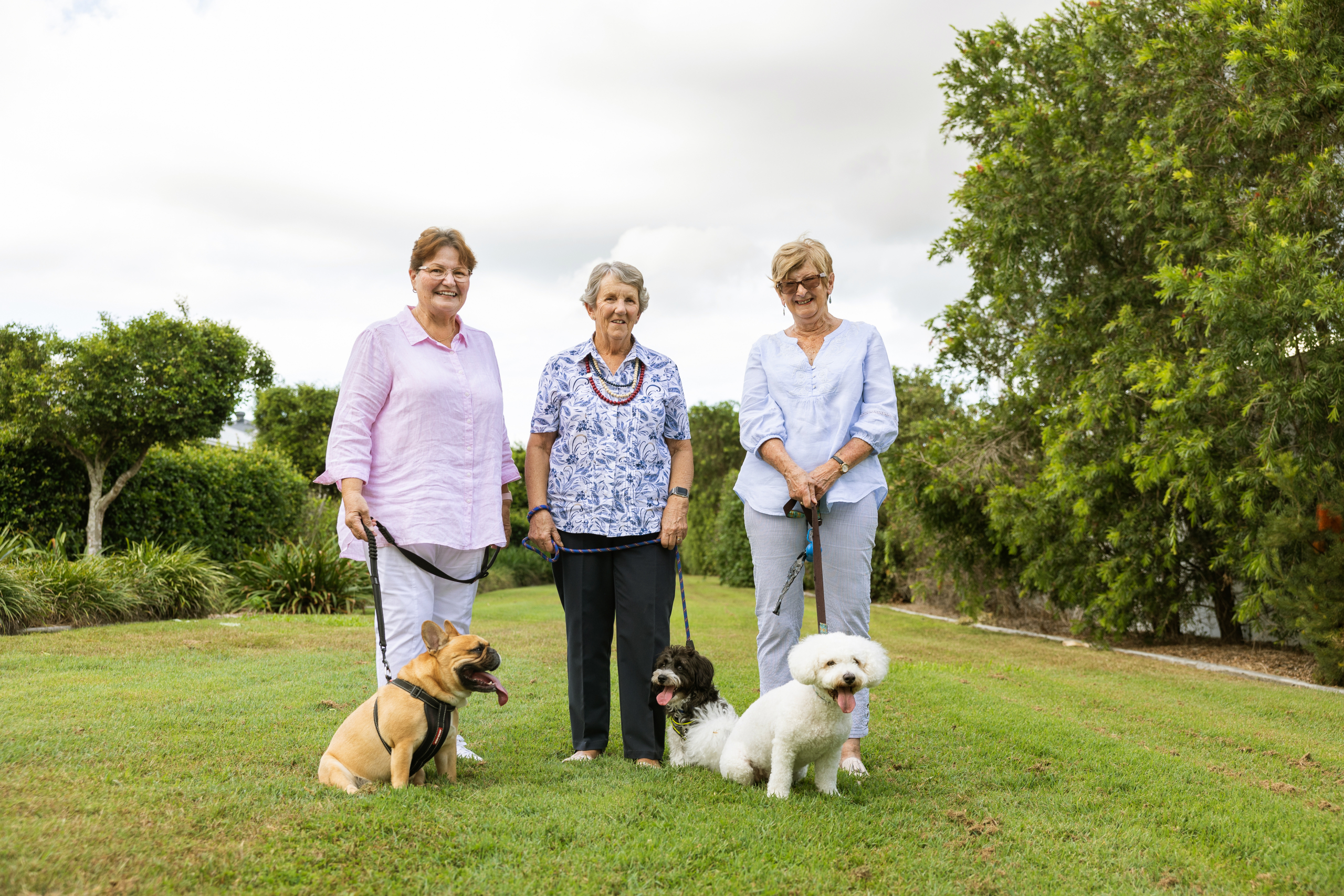
At The Village Retirement Group, we have many pet lovers in our team and several pet-friendly retirement communities across Brisbane, meaning you don’t have to give up lil Luna or Max when you make the transition into independent living.
If you’d like to attend a tour of one of our retirement communities, please don’t hesitate to enquire today and get the ball rolling on your retirement journey.